Introduction
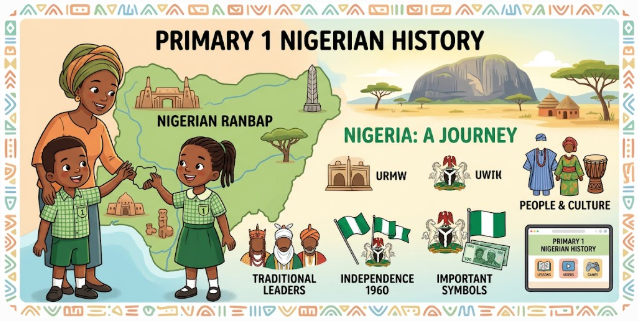
Nigerian History is a subject that introduces pupils to the history, people, places, cultures, and important events of Nigeria. At the Primary 1 level, pupils are introduced to simple knowledge about their family, community, local environment, and Nigeria as a country.
The subject helps pupils understand where they come from and develop respect for their parents, elders, community leaders, and other members of society. Pupils learn about important Nigerian people and places, traditional occupations, festivals, cultural practices, national symbols, and the different groups that make up Nigeria.
Through Nigerian History, pupils develop a sense of identity, patriotism, respect for cultural diversity, and appreciation of Nigeria's rich heritage. The subject also encourages pupils to understand the importance of cooperation, peace, unity, and responsible citizenship.
General Objectives
By the end of Primary 1, pupils should be able to:
- Explain in simple terms what history means and why people learn about the past.
- Identify members of their family and describe simple family relationships.
- Describe their immediate community and identify important places within it.
- Identify Nigeria as their country and recognise the Nigerian flag and other national symbols.
- Name some important Nigerian leaders and historical figures appropriate to their level.
- Identify some major ethnic and cultural groups in Nigeria and appreciate their differences.
- Describe simple Nigerian traditional customs, festivals, food, dressing, and ways of life.
- Identify common traditional occupations such as farming, fishing, trading, and craftwork.
- Develop respect for parents, elders, traditional rulers, and community leaders.
- Appreciate Nigeria's cultural heritage and the importance of preserving it.
- Develop a sense of patriotism and national identity.
- Understand the importance of peace, cooperation, tolerance, and unity among Nigerians.
- Develop curiosity about the past by asking simple questions about their family, community, and country.
- Demonstrate responsible behaviour at home, in school, and in the community.
- Teacher: Nuhu Ishaya