Introduction
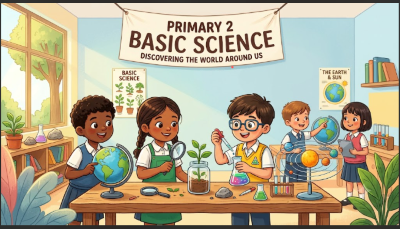
Basic Science at the Primary 2 level introduces young learners to the world around them and helps them develop curiosity about living things, non-living things, their bodies, the environment, materials, weather, and simple scientific activities. The subject encourages pupils to observe, identify, classify, compare, ask simple questions, and describe things they see in their everyday environment. Through practical activities, discussions, demonstrations, and observations, pupils begin to understand basic scientific ideas and develop good habits that promote personal health, safety, and care for the environment.
General Objectives
By the end of Primary 2, pupils should be able to:
- Identify and describe common living and non-living things in their environment.
- Recognise the major parts of the human body and state their simple functions.
- Develop awareness of personal hygiene, healthy habits, and environmental cleanliness.
- Identify common plants and animals and describe some of their basic features.
- Recognise different materials and objects found at home, school, and in the community.
- Observe and describe simple weather conditions such as sunshine, rainfall, wind, and clouds.
- Develop basic skills in observation, classification, comparison, measurement, and communication.
- Use simple scientific ideas to explain things they observe in their immediate environment.
- Demonstrate safety habits when using common objects and materials.
- Develop curiosity, creativity, problem-solving skills, and positive attitudes towards science.
- Appreciate the importance of protecting plants, animals, water, air, and the general environment.
- Participate actively in simple practical and experimental activities appropriate for their age.
- Teacher: Nuhu Ishaya