Introduction
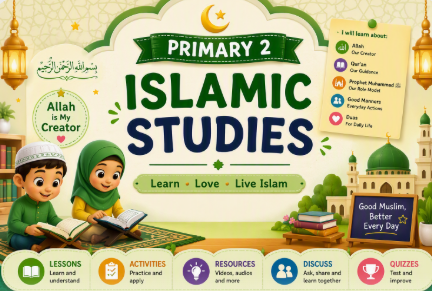
Islamic Studies at the Primary 2 level introduces pupils to basic teachings, practices, values, and morals of Islam in a simple and practical way. The subject helps pupils develop knowledge of Allah, the Qur'an, Prophet Muhammad (SAW), Islamic worship, good manners, cleanliness, honesty, kindness, obedience, and peaceful living. Through simple Qur'anic teachings, stories, discussions, memorisation, demonstrations, and practical activities, pupils learn how to apply Islamic values in their daily lives at home, in school, and in the community.
General Objectives
By the end of Primary 2, pupils should be able to:
- Explain in simple terms who Allah is and recognise Him as the Creator.
- Identify some of the beautiful names and attributes of Allah.
- Recognise the Qur'an as the holy book of Islam and demonstrate respect for it.
- Recite selected short surahs and simple Islamic prayers (Du'a) correctly.
- Identify Prophet Muhammad (SAW) and narrate simple stories about his life and teachings.
- Identify the Five Pillars of Islam in simple terms.
- Demonstrate basic knowledge of Salah (prayer) and its importance.
- Explain the importance of cleanliness and purification (Taharah) in Islam.
- Demonstrate good Islamic manners towards parents, teachers, elders, friends, and neighbours.
- Explain the importance of truthfulness, honesty, kindness, sharing, patience, and forgiveness.
- Identify behaviours that are considered good and bad according to Islamic teachings.
- Explain the importance of obedience to Allah and respect for parents and lawful authority.
- Demonstrate simple Islamic manners when eating, greeting, speaking, sleeping, and interacting with others.
- Develop an appreciation for peace, cooperation, respect, and peaceful coexistence.
- Apply basic Islamic teachings and moral values in everyday life.
- Teacher: Nuhu Ishaya